Marky
Co-founded an AI social marketing SaaS and grew it to 168k businesses served and $2M in revenue.
Co-Founder, Head of Product

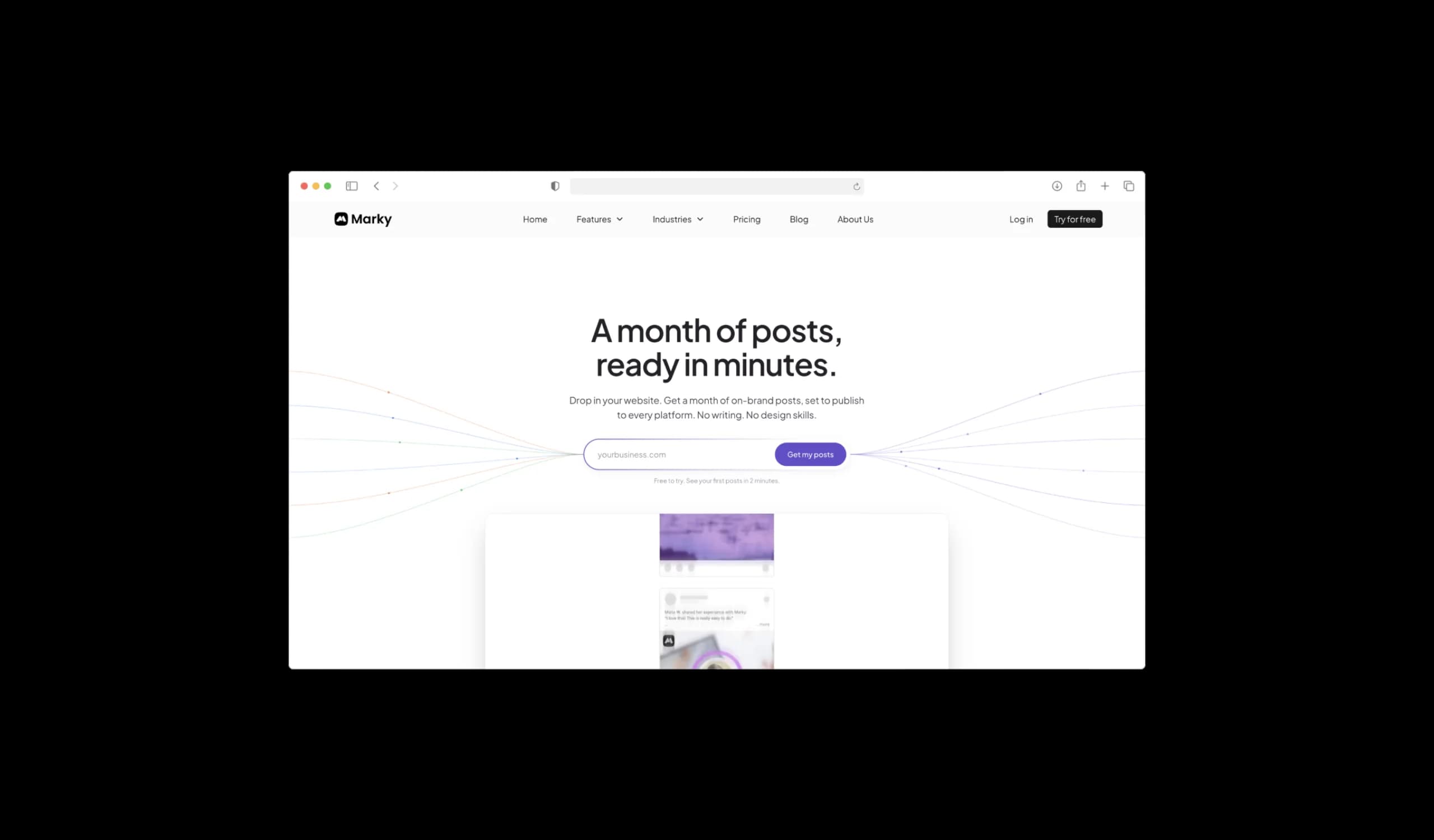
From zero to one
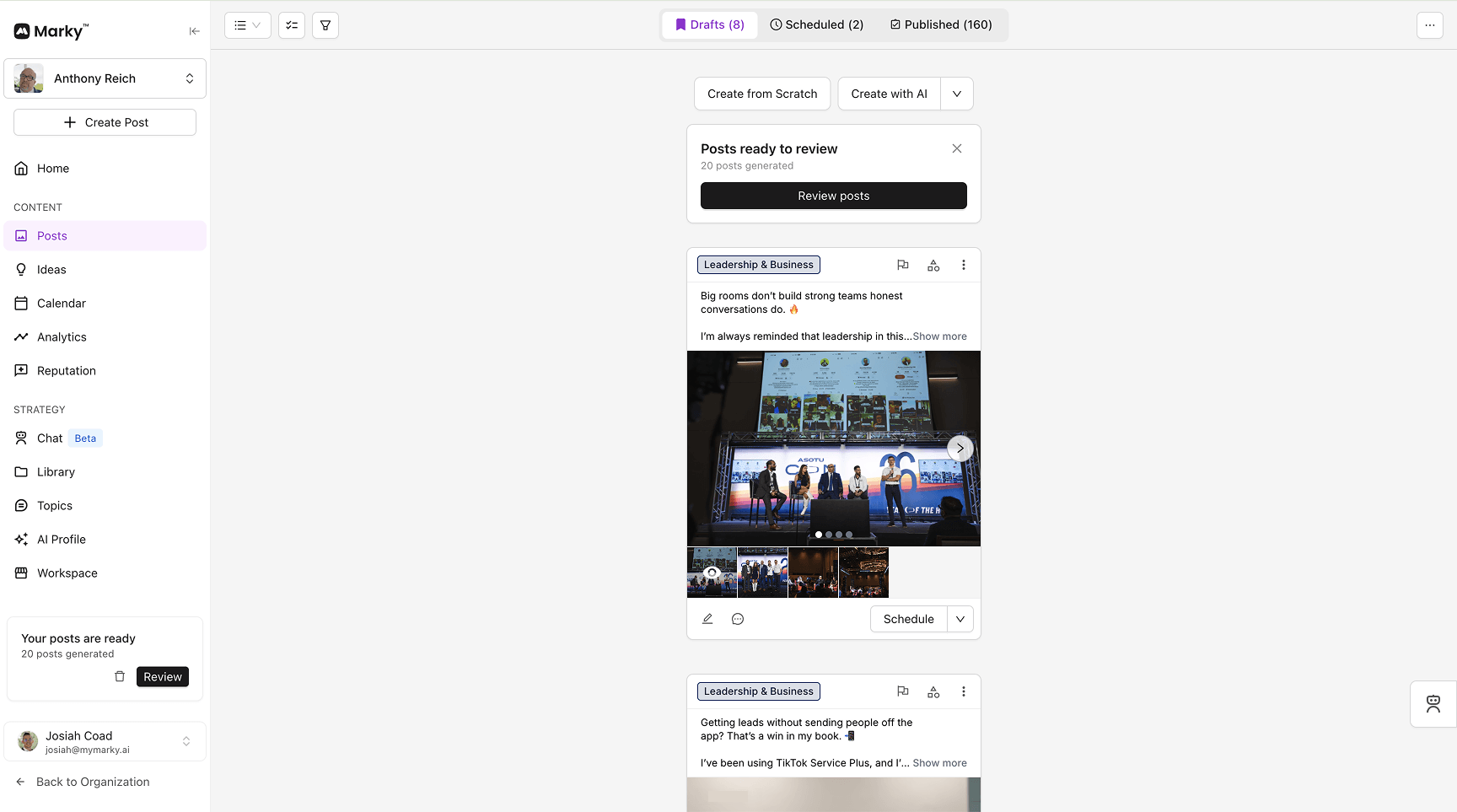
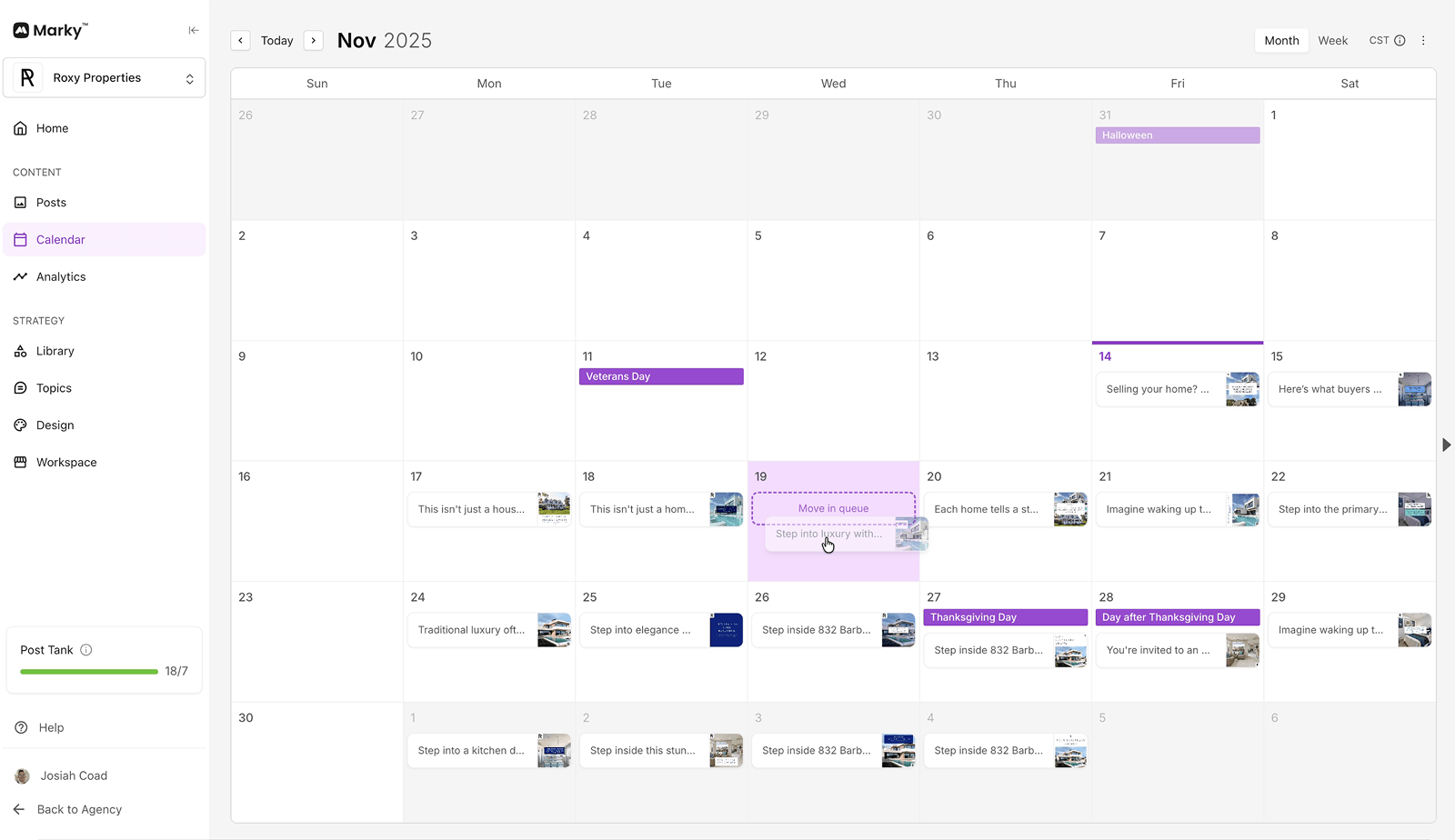
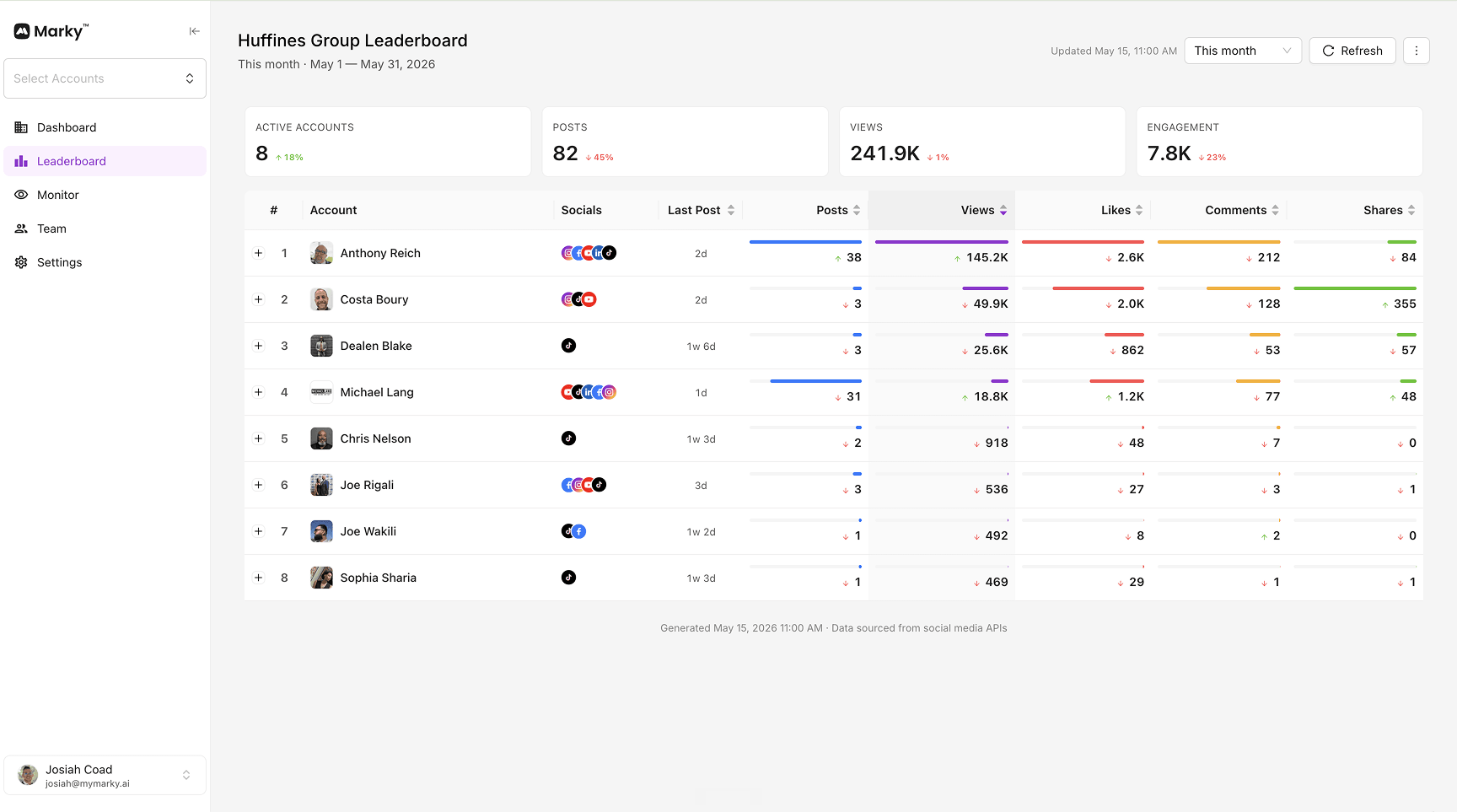
Marky is an AI-powered platform that helps small businesses across the entire social media workflow. It generates on-brand posts and schedules them directly to platforms like Instagram, Facebook, and LinkedIn. For most small businesses, consistent marketing is the difference between growing and staying invisible, but it's also one of the first things that falls off the plate. The time it takes to plan, write, design, and post adds up fast, and hiring an agency ($2–5K/month) isn't realistic for a business running lean. Marky lets them multiply their marketing efforts, reducing that costly burden into 5 focused minutes.
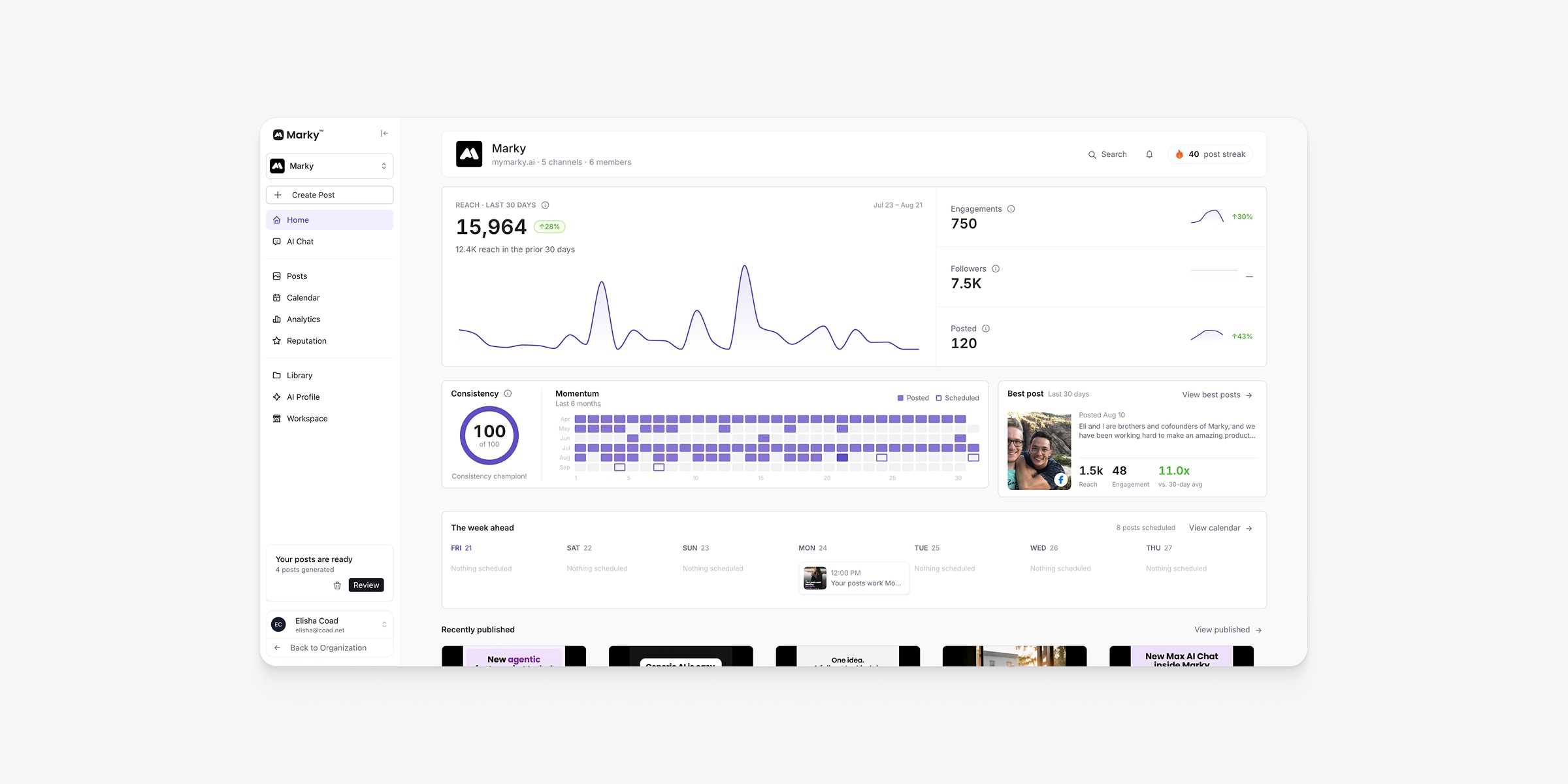
From meetup idea to product
My brother and I founded Marky in 2023. He led the business side, and I led the product. The idea started at an AI meetup where he met someone who helped book authors. Authors would spend years writing a novel, but on launch, their books wouldn't sell. Nobody would buy it because nobody knew about it. We designed Marky to help them get the word out on social media.
Validating demand before writing code
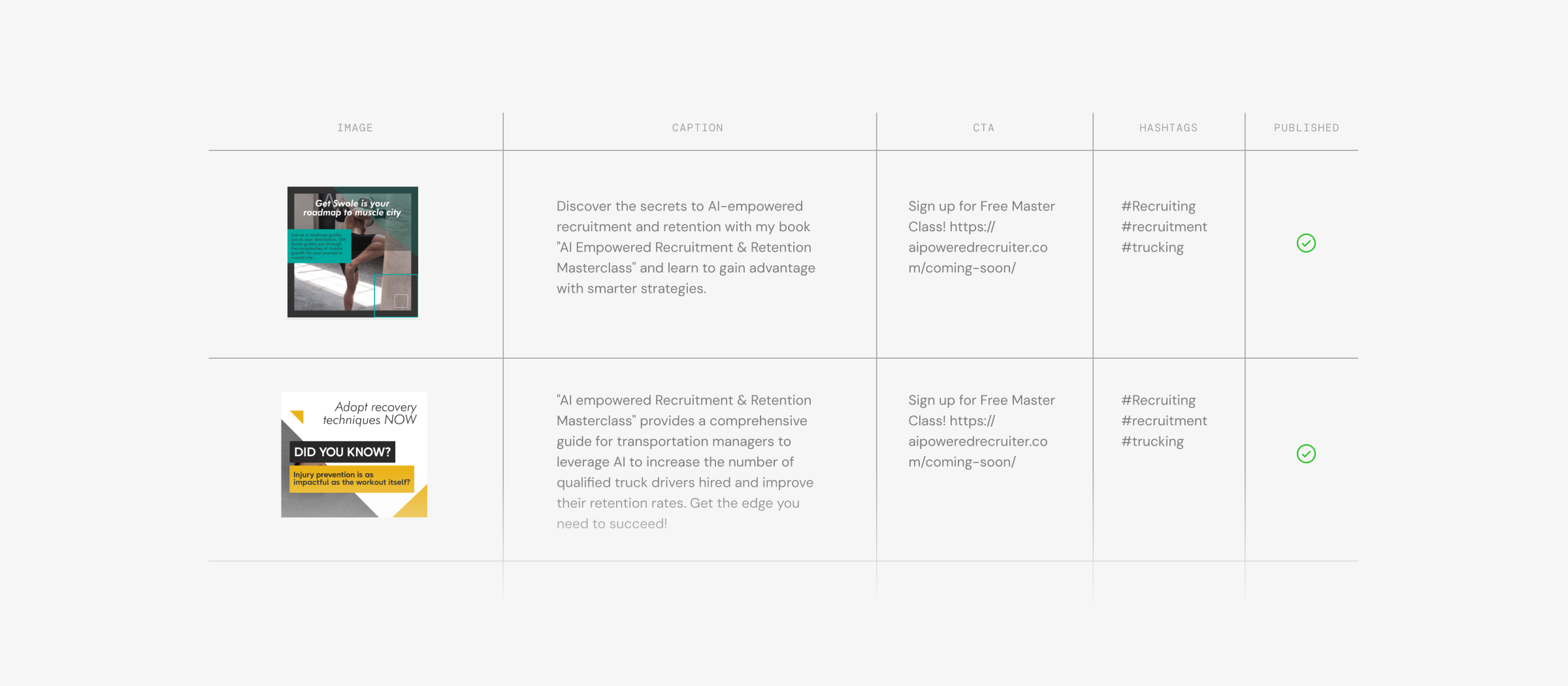
Our earliest stages were focused on understanding the problem. We operated concierge-style, hopping on calls with users and delivering the solution by hand. The first "product" was a hacked-together Google Sheets + workflow automation tool, with us working with customers and setting up accounts directly. This enabled us to rapidly explore, iterate on methods, and validate willingness to pay before building anything.
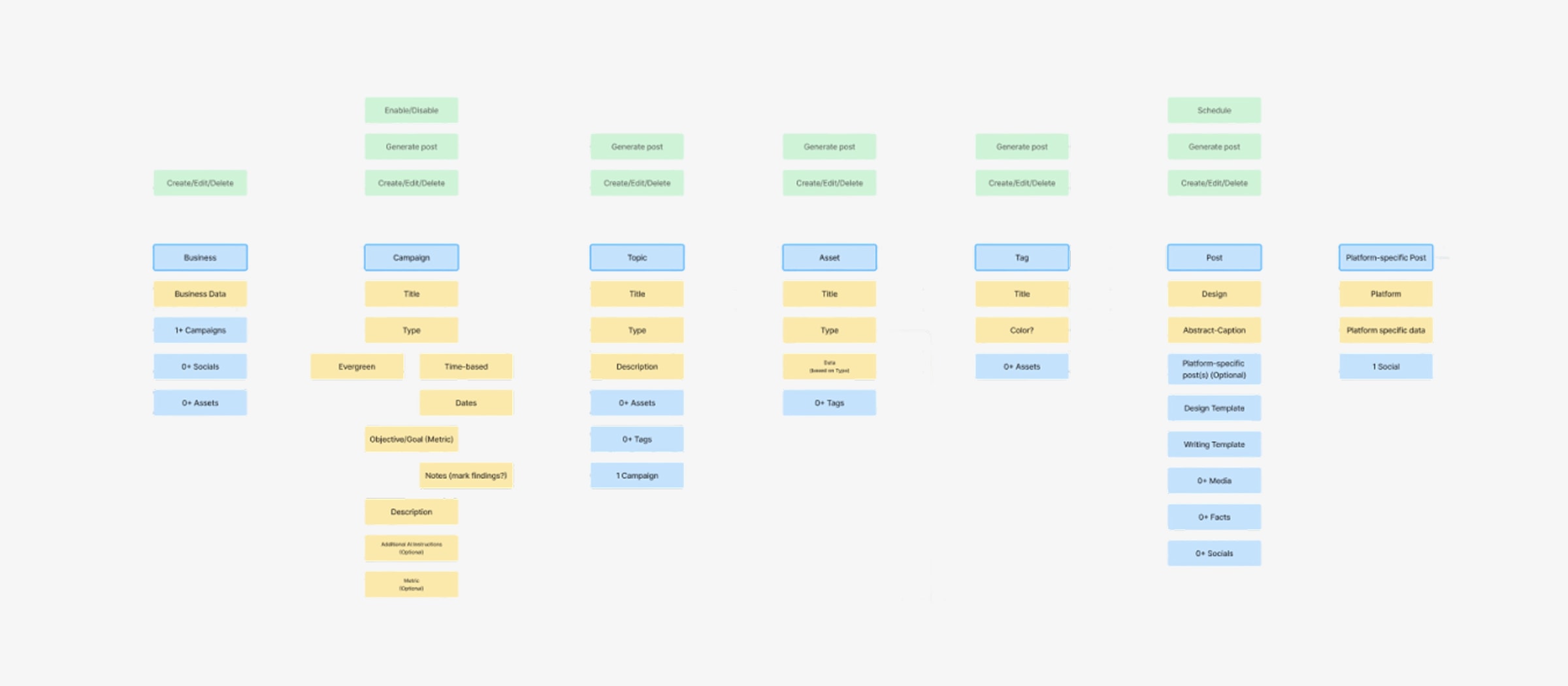
Designing a brand for a broader market
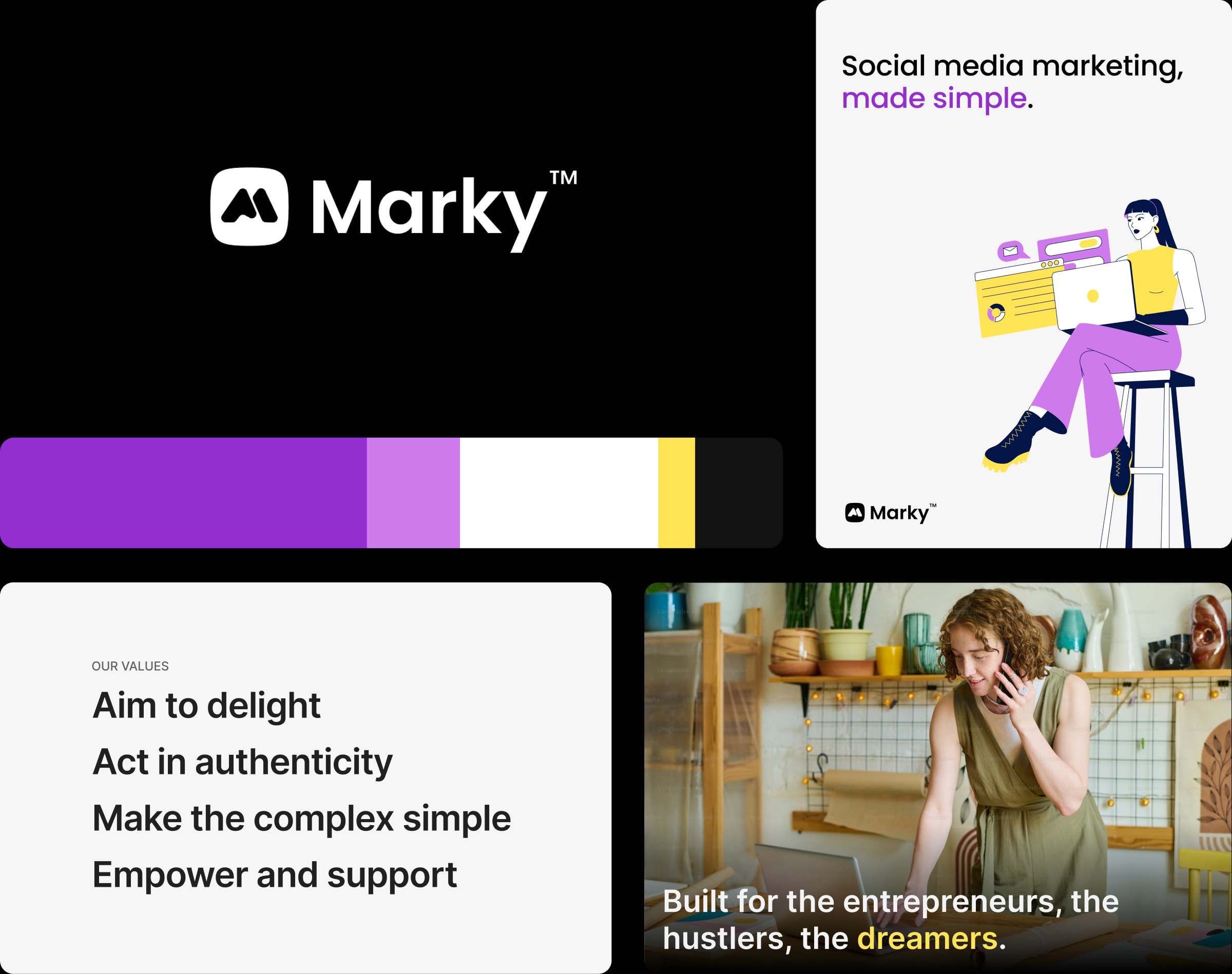
As more businesses outside of publishing showed interest, we naturally grew to support a wider range of small businesses. With a broader market came the need for a real brand. I designed ours around a simple mission: help small businesses reach their audience.
Growing the product
Reframing what we were actually building
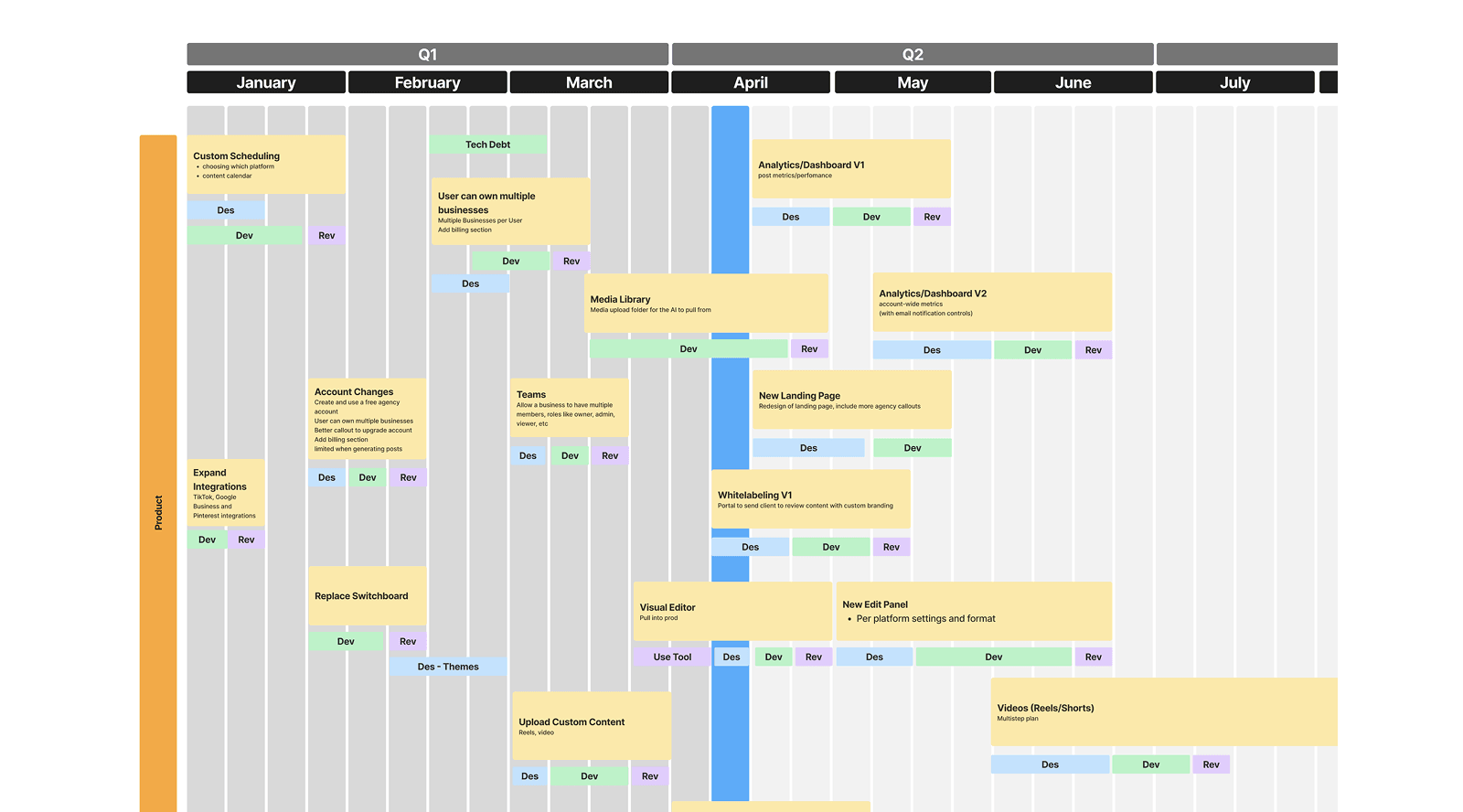
I led our development team of 5, owning research, design, and strategy. With our growing customer base, we needed to build a better vision for what we were actually building.
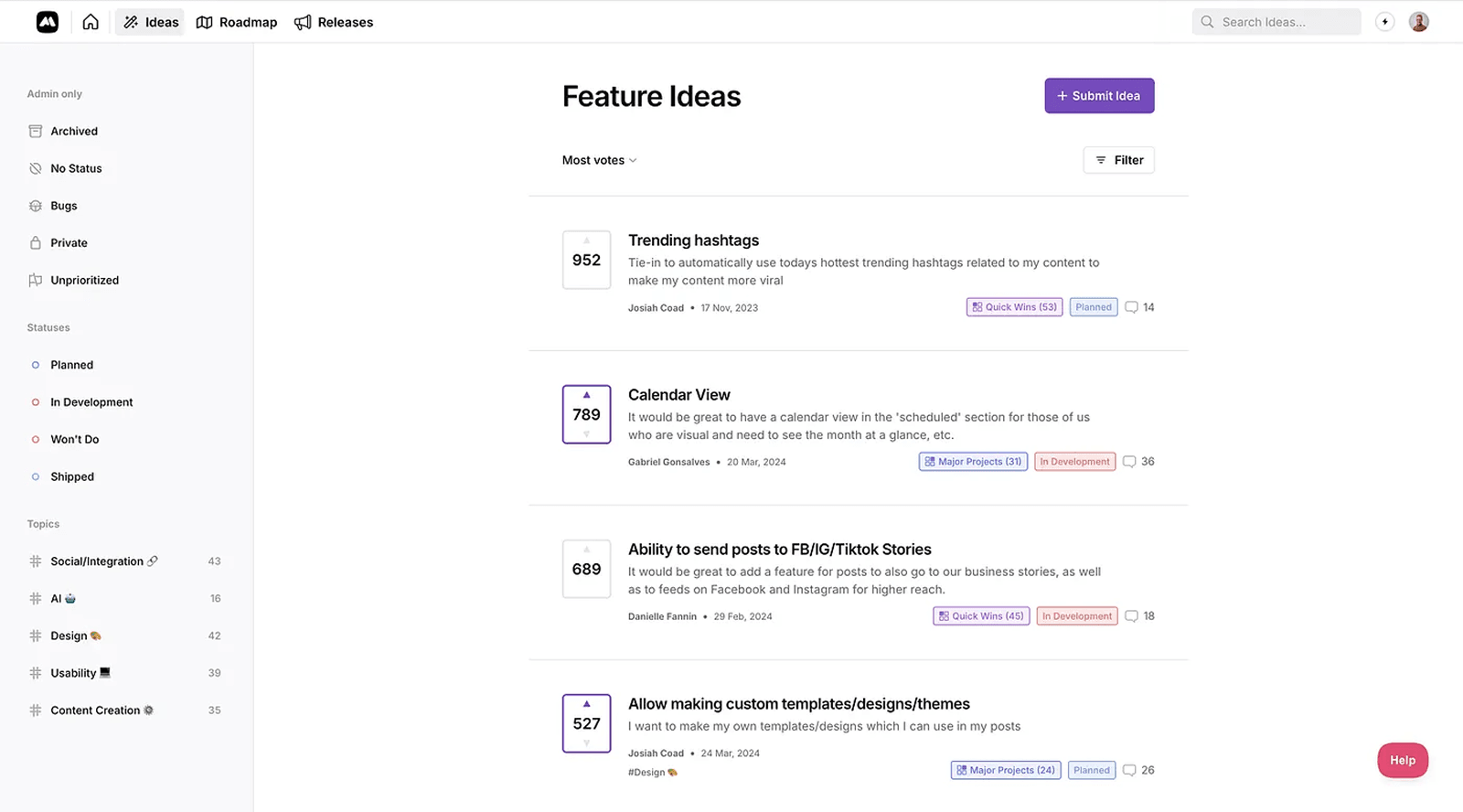
Using a combination of user interviews, a feature request board, and in-product data, I was better able to understand the problem we were solving. We couldn't just "create content", the real problem was helping customers grow their business through social media.
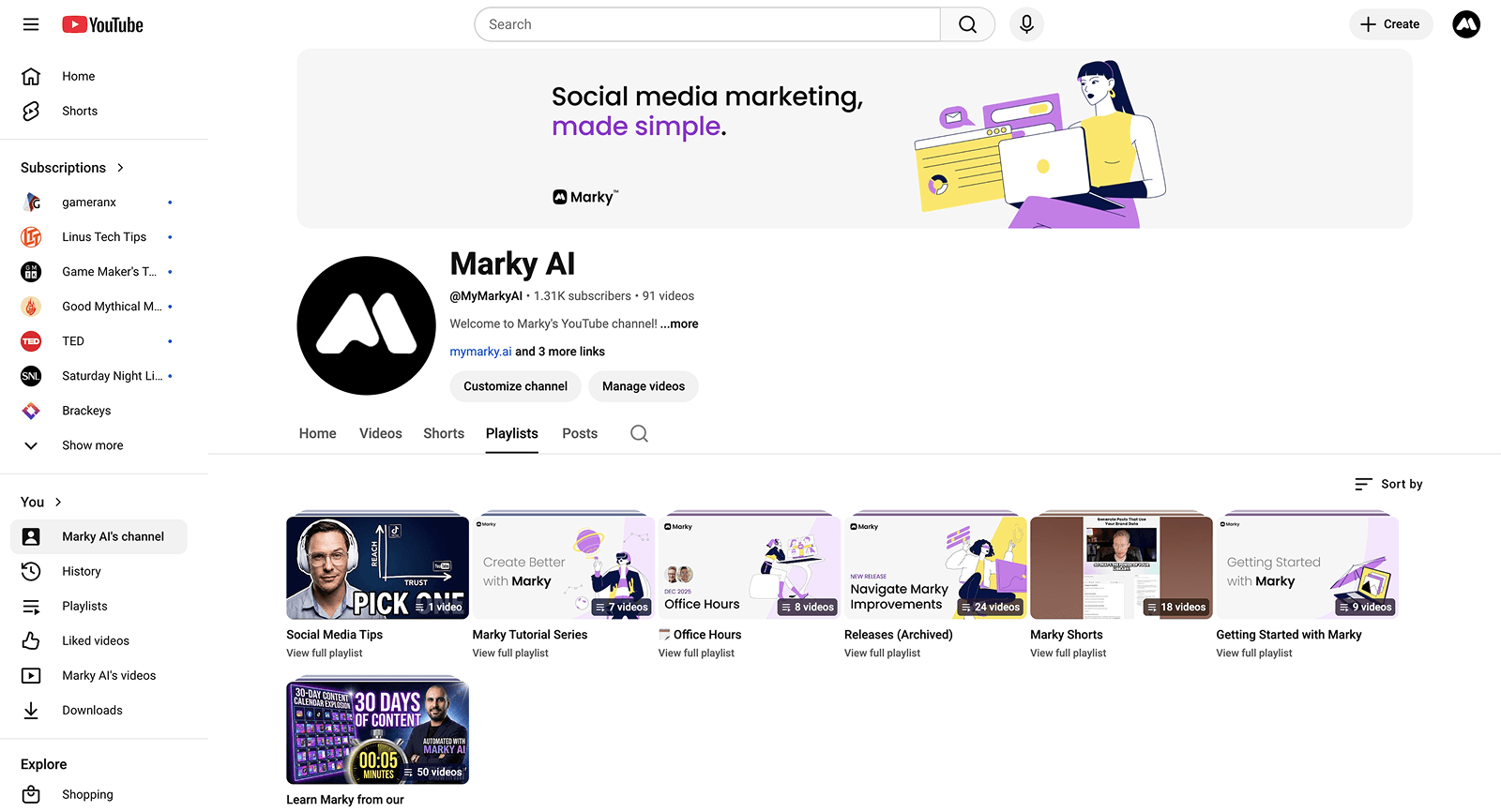
For example, one finding was that users whose posts included real images from their own business outperformed those using stock imagery. That led us to automatically pull images from customers' websites on signup so every post felt specific to the business from the start. I also started a YouTube series, led our customer support team, and created social media education resources.
Rejection rate as a decision-making lens
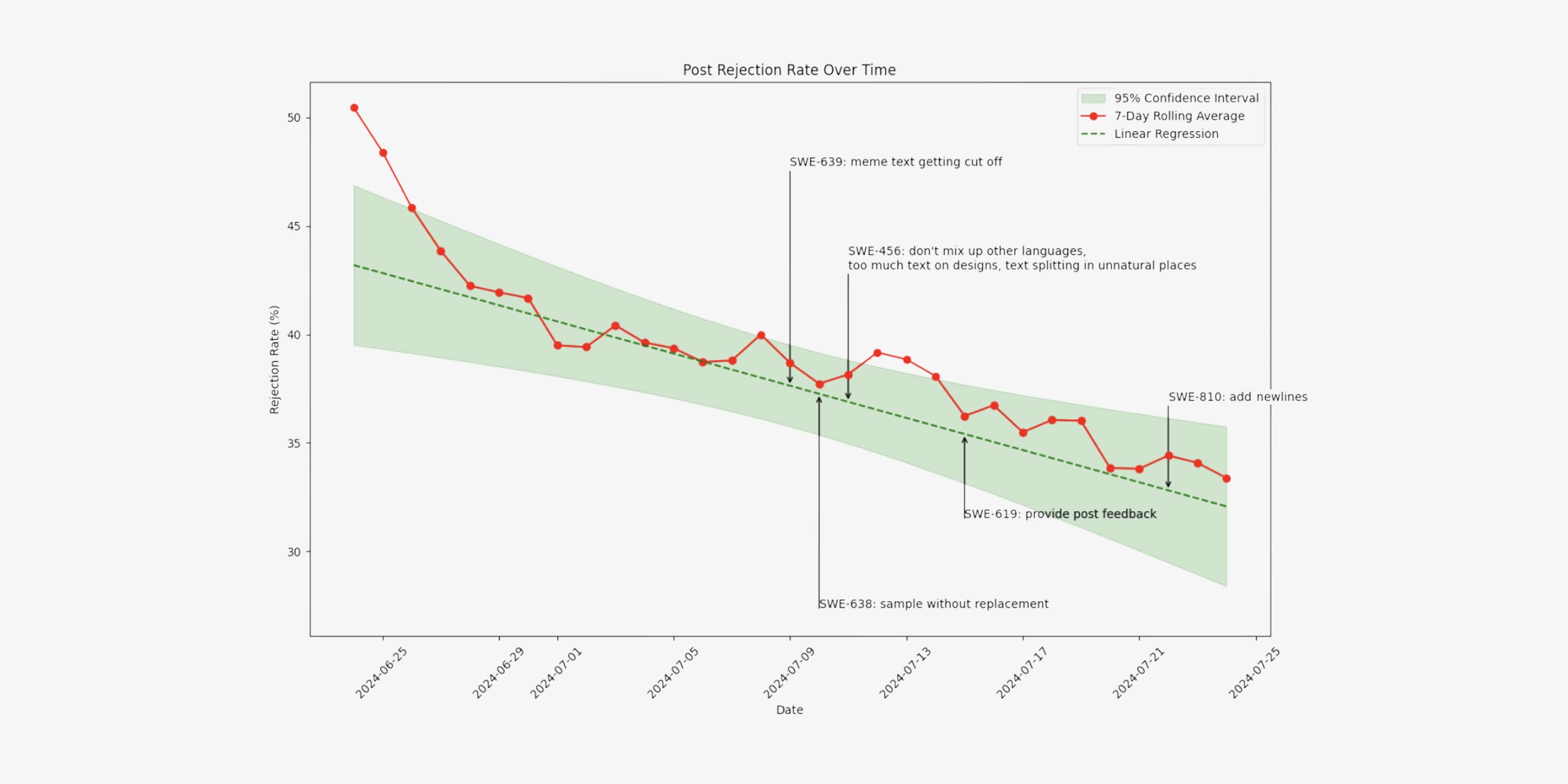
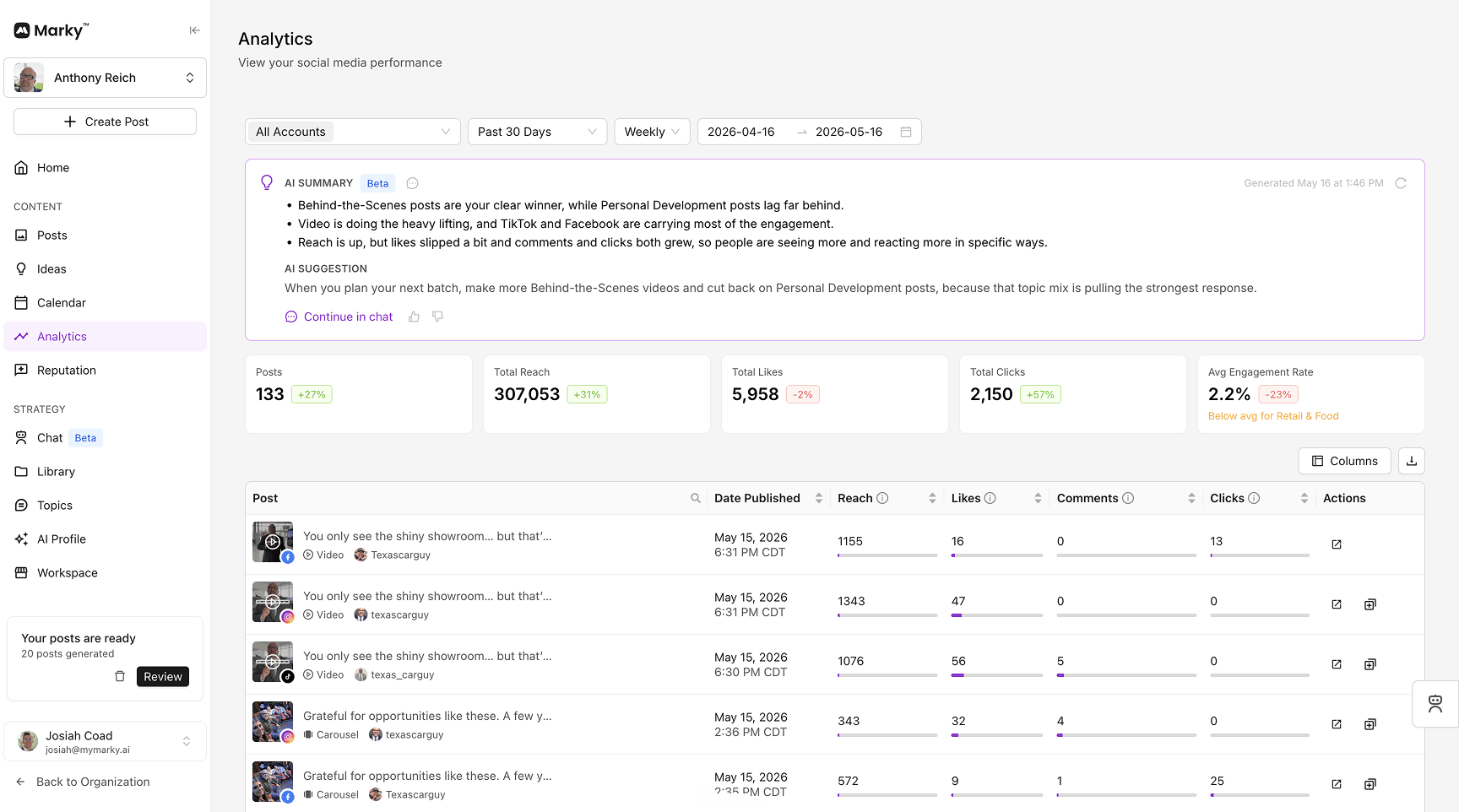
Post-rejection rate was one of our North Star metrics, the most direct measure of whether Marky was producing the content users wanted (Doerr's Measure What Matters). To improve it, we tracked what users edited; whether they changed the design, the caption, swapped out a photo, and similar changes. We paired this with qualitative feedback using the occasional survey that asked users why they rejected a post. Every improvement shipped as an A/B experiment so we could validate impact before rolling it out fully.
Killing a feature to build better process
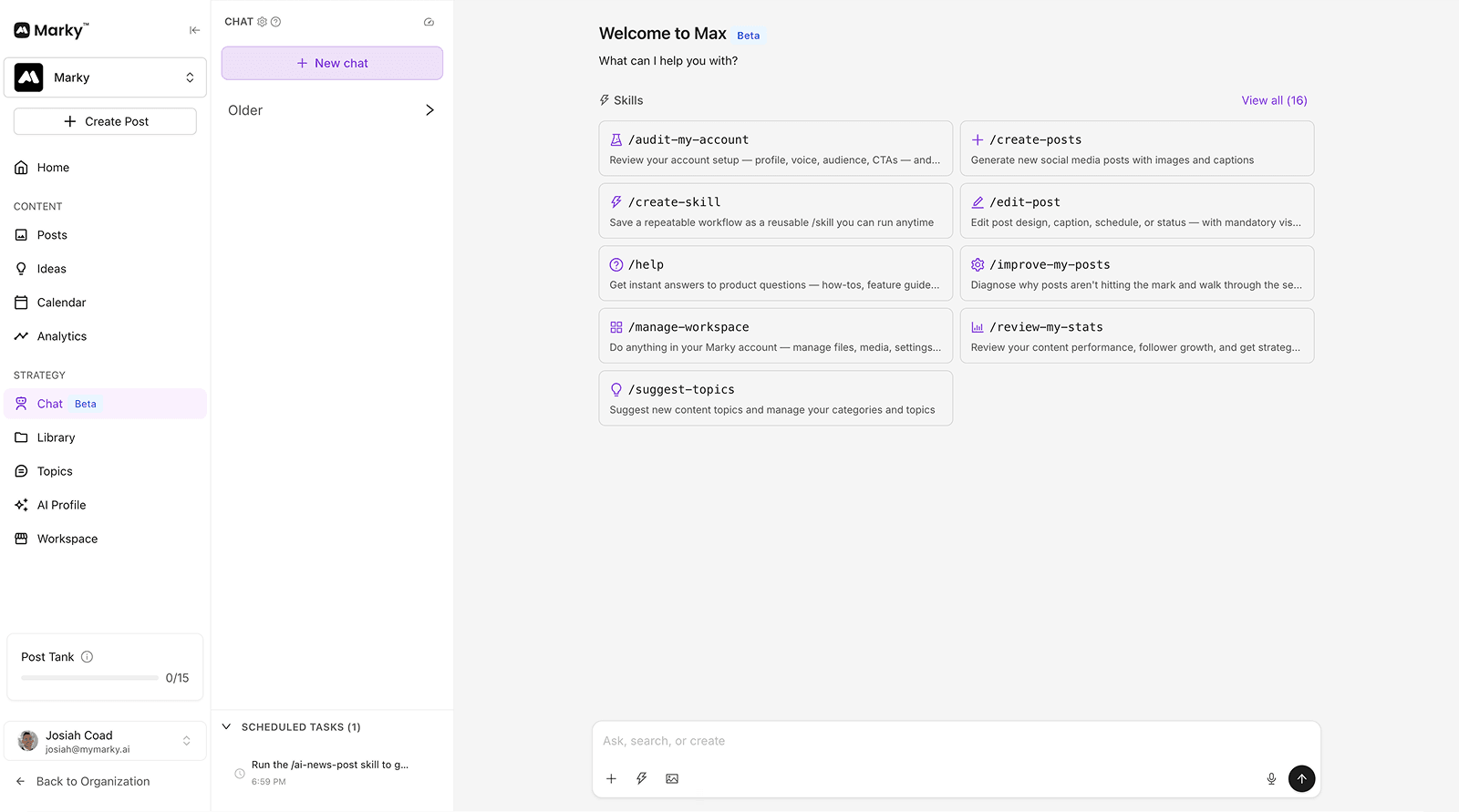
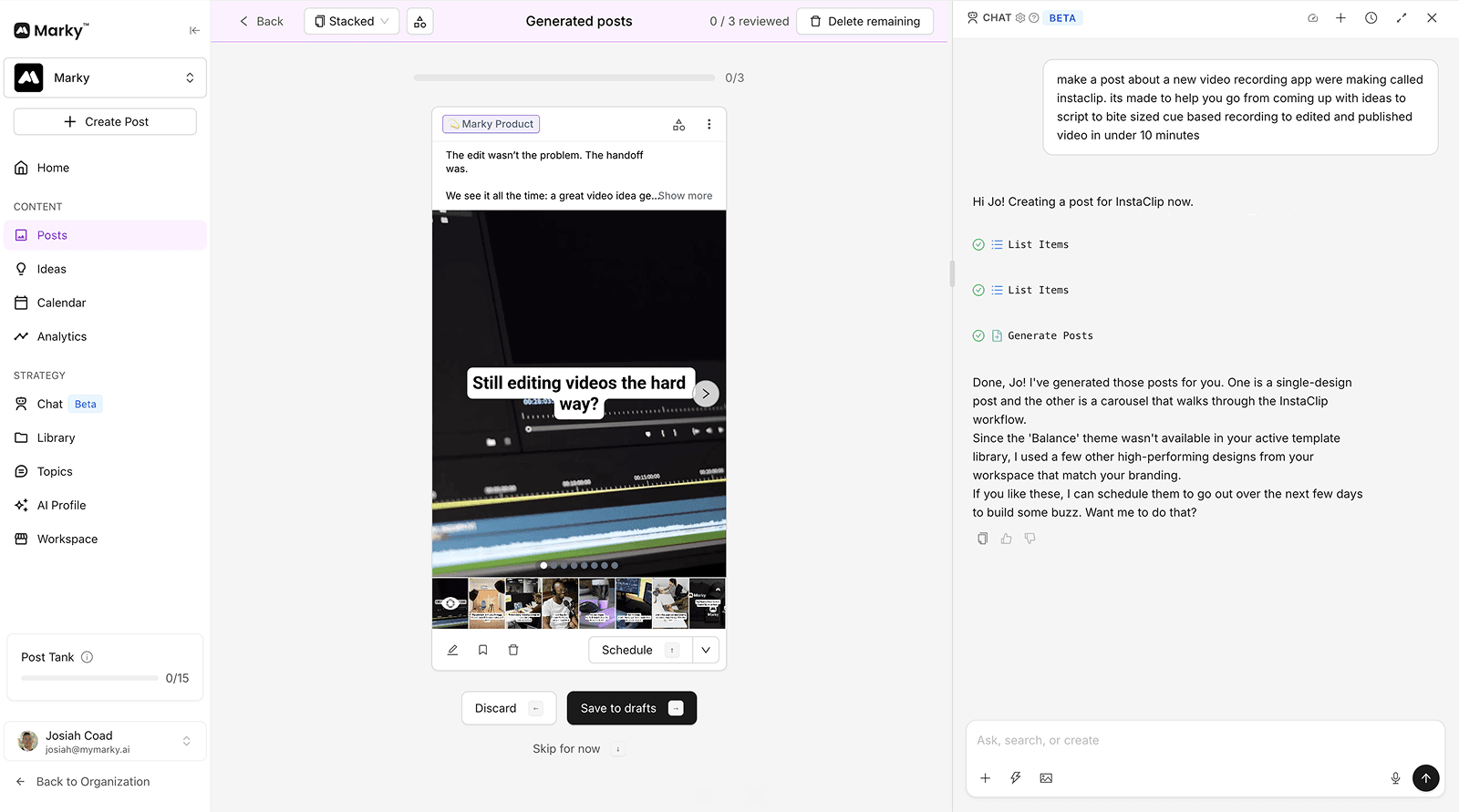
One difficult call was after we built an experimental chat-based interface and shipped it publicly. Many users reported using ChatGPT in conjunction with our app, so this felt like a sure win. Some users loved it, but others were frustrated due to unmet expectations. Rather than force it on everyone, I pulled the feature back and restructured our beta program, making experimental features opt-in instead. Every experimental feature after that shipped through the program, which gave us real feedback without risking the core experience.
Design deep dives
Our team shrank and I took on full-stack engineering in addition to product design. The tighter constraints ended up helping us reconsider what's important, and we cut meetings and processes that had been slowing us down. I picked up coding using AI-augmented workflows, and this period produced some of the strongest product work.
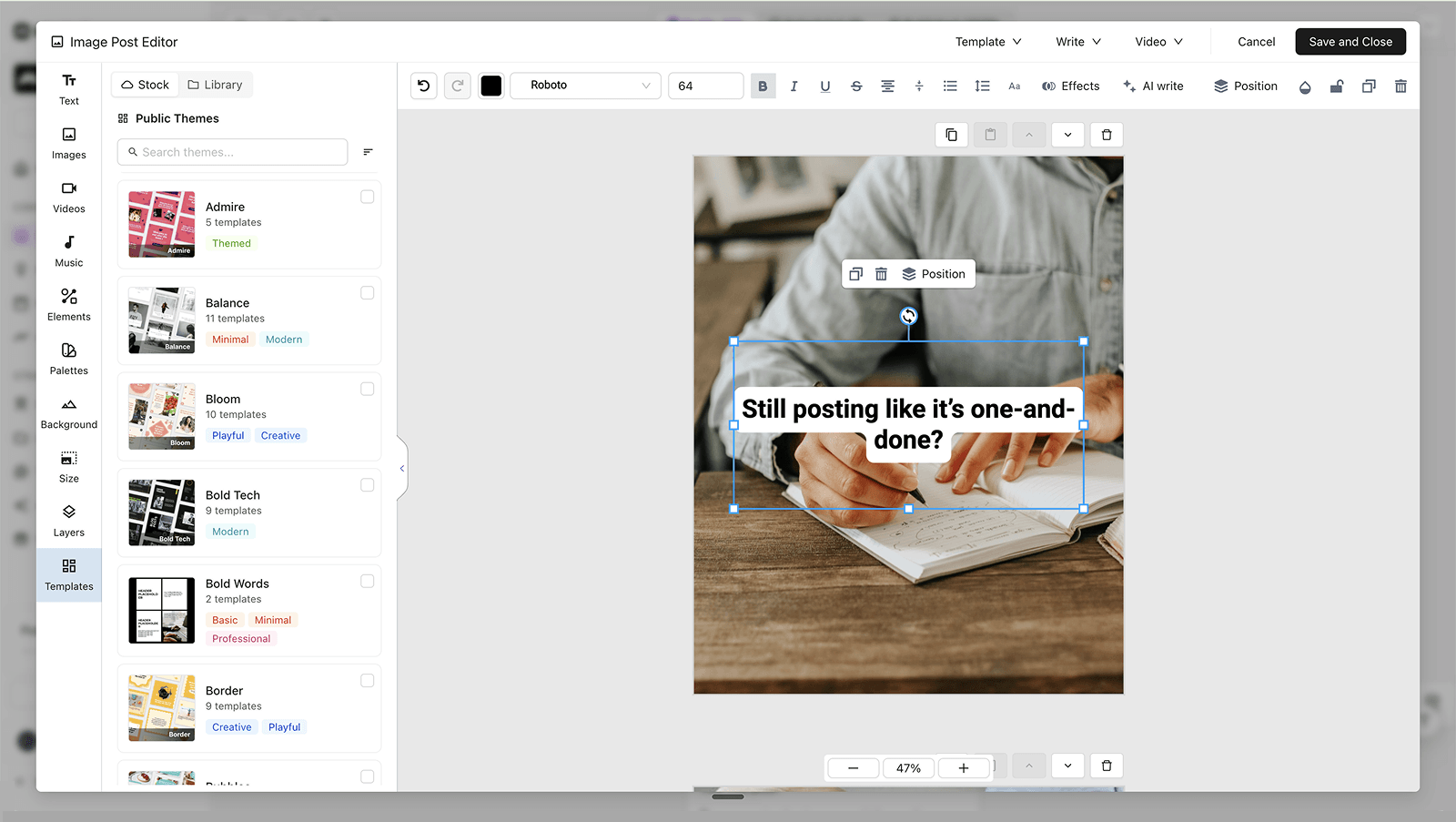
Two pieces are worth their own telling. Redesigning onboarding took save rate from 33% to 50%, viewed posts from 17% to 68%, and time to first post from ten minutes to three, plus a discoverability fix that took three tries to get right. The second was an auto-learning system that turns every caption edit into a signal, so the product gets more personalized just by being used.
Impact
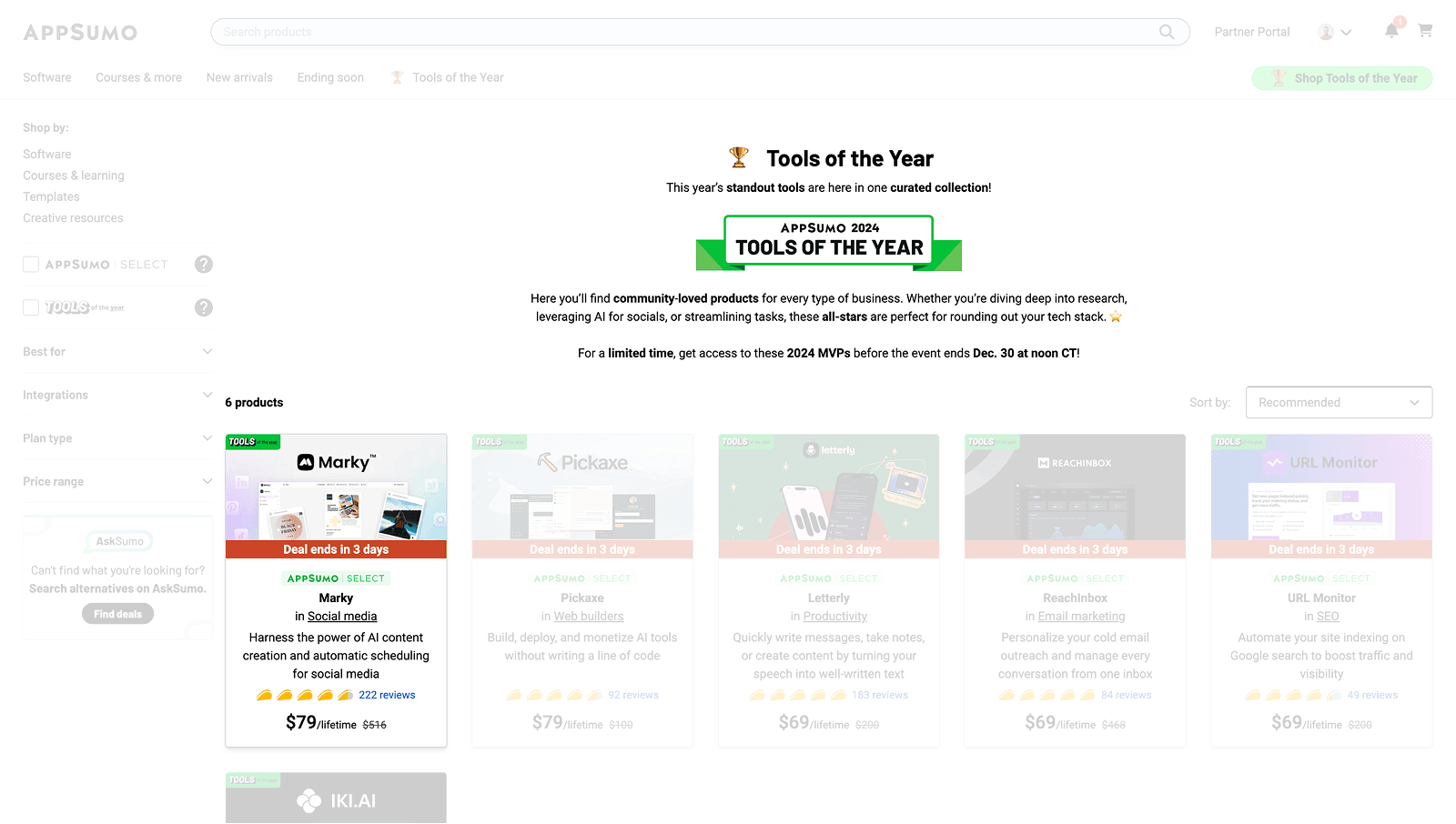
What started as a Google Sheet and a few authors grew into a platform serving 168k businesses. I'm grateful for the opportunity to build Marky with such a great team and it's been rewarding to see the impact it's had on our customers.
- 168k+
- 5.4M+
- Top 2%
What customers say
There are plenty of solutions out there, most of them with AI, but what really makes Marky different is the commitment, the founders, the communication, how serious they take it to really improve on a daily basis. They make the customer's pains their own pain. I really love how the platform has evolved.
It doesn't try to replace your voice or turn your business into something it isn't. It simply makes the things you're already trying to do easier and more consistent.
It took about 5 minutes to get a month's worth of very high quality posts. I guess I will be using social media after all. Honestly, so grateful for this product.
Marky is hands down the best social content tool of 2024! The only one that truly delivers. Highly recommended!
Takeaways
AI is changing how I design
There's always been a gap between a mockup and the code. What the designer sees and what the user sees. What the designer thinks it will feel like and what it actually feels like. AI workflows and a bit of code knowledge have opened up a new lane for designers. Now we can iterate on real interactions instead of simulated ones and get feedback from users on real experiences instead of imagined ones. When execution is no longer the bottleneck, knowing what to build and why matters more than ever.
Great product isn't enough
One humbling realization is how the product is just one aspect of a successful business. Ads, the marketing funnel, and customer success played just as important a role in Marky's growth as the product itself.
Less process, more velocity
Too many meetings and too much process nearly killed our velocity. Replacing detailed handoff docs and obligatory meetings with continuous conversation (Lean UX principle) was one of the best decisions we made.