

Lore
UX / UI / Branding
overview
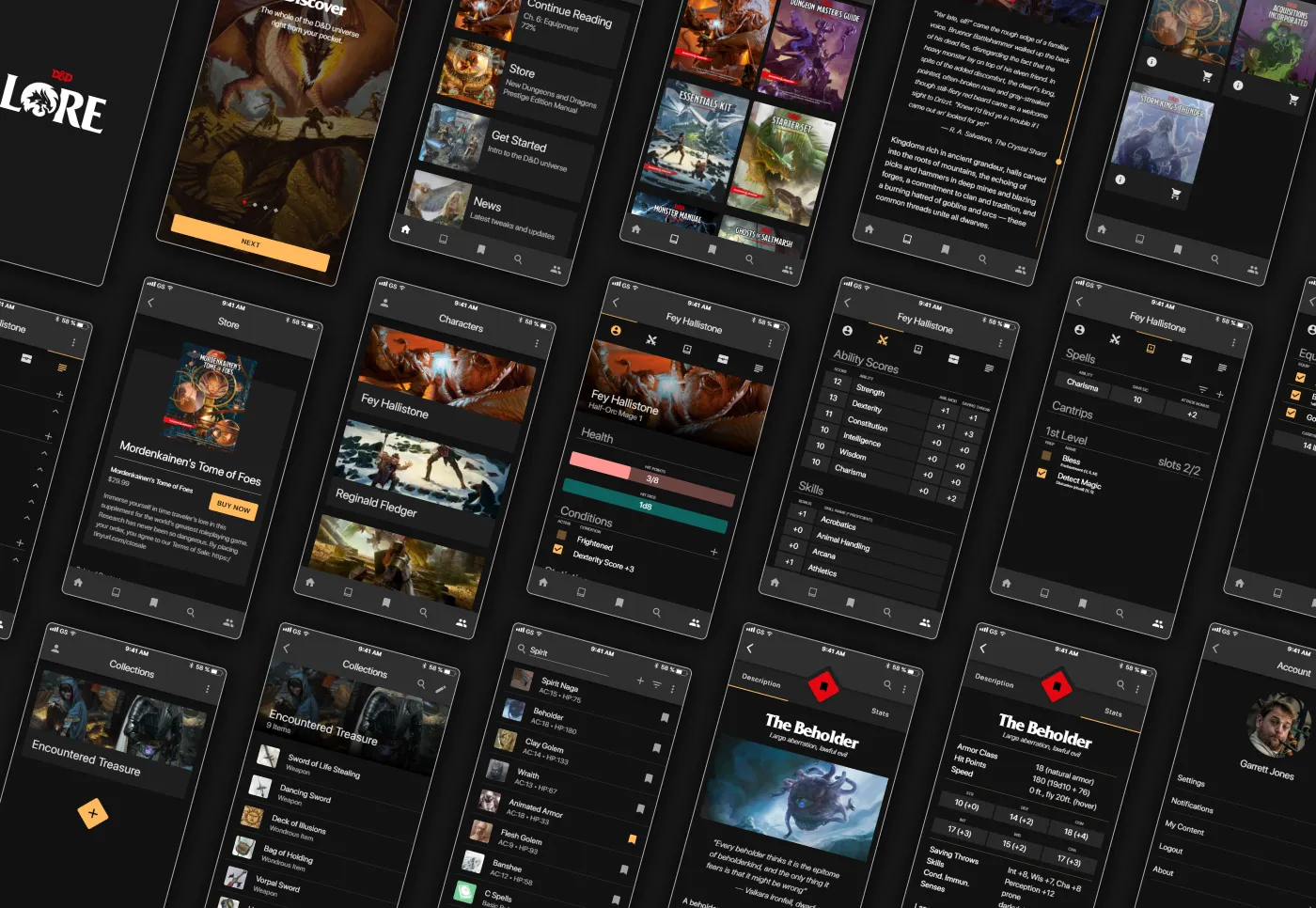
D&D Beyond launched in 2017 as a digital companion for Dungeons & Dragons, but its mobile app sat at a 2.7/5 rating with just 807 reviews. The app was essentially a bookstore — you could search, read, and pay, but couldn't manage characters, roll dice, or do anything players actually need at the table. Lore is a speculative redesign that reimagines the experience around real player needs, informed by interviews with players ranging from first-timers to veterans.
Timeline
1 month, 2020
Role
UX/UI Designer
Tools
Adobe XD, Illustrator, Photoshop
research
D&D Beyond had a 2.7-star rating and the reviews told the story — the app was a bookstore, not a companion. I dug into the existing experience and the broader landscape of tabletop tools to understand what was missing.
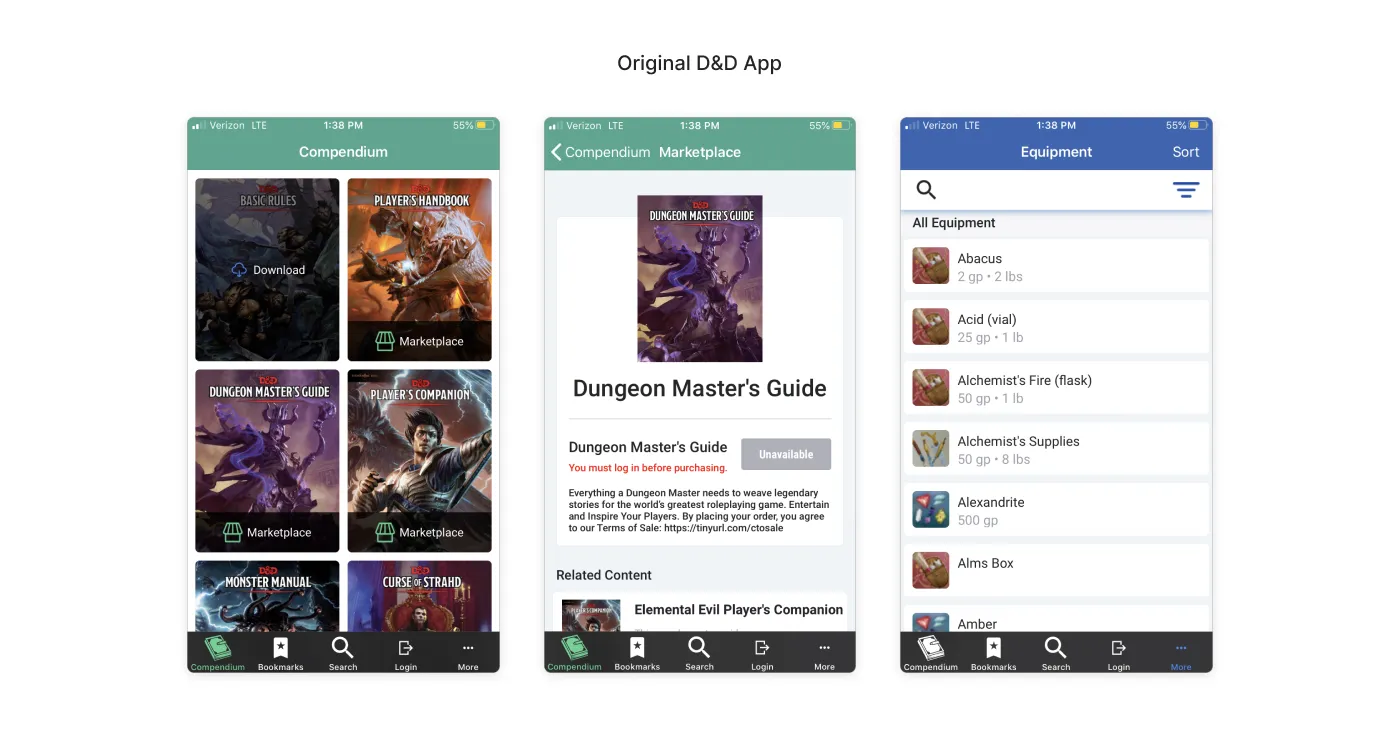
Competitive audit
I mapped D&D Beyond against the third-party apps players were actually using — Fight Club 5th Edition, Complete Reference for D&D 5e, and Spellbooks. The gap was clear: D&D Beyond had the official content library but no character management, dice rolling, or content creation. The third-party apps had all of that but lacked official content. Players were juggling multiple apps because no single one served the full experience.
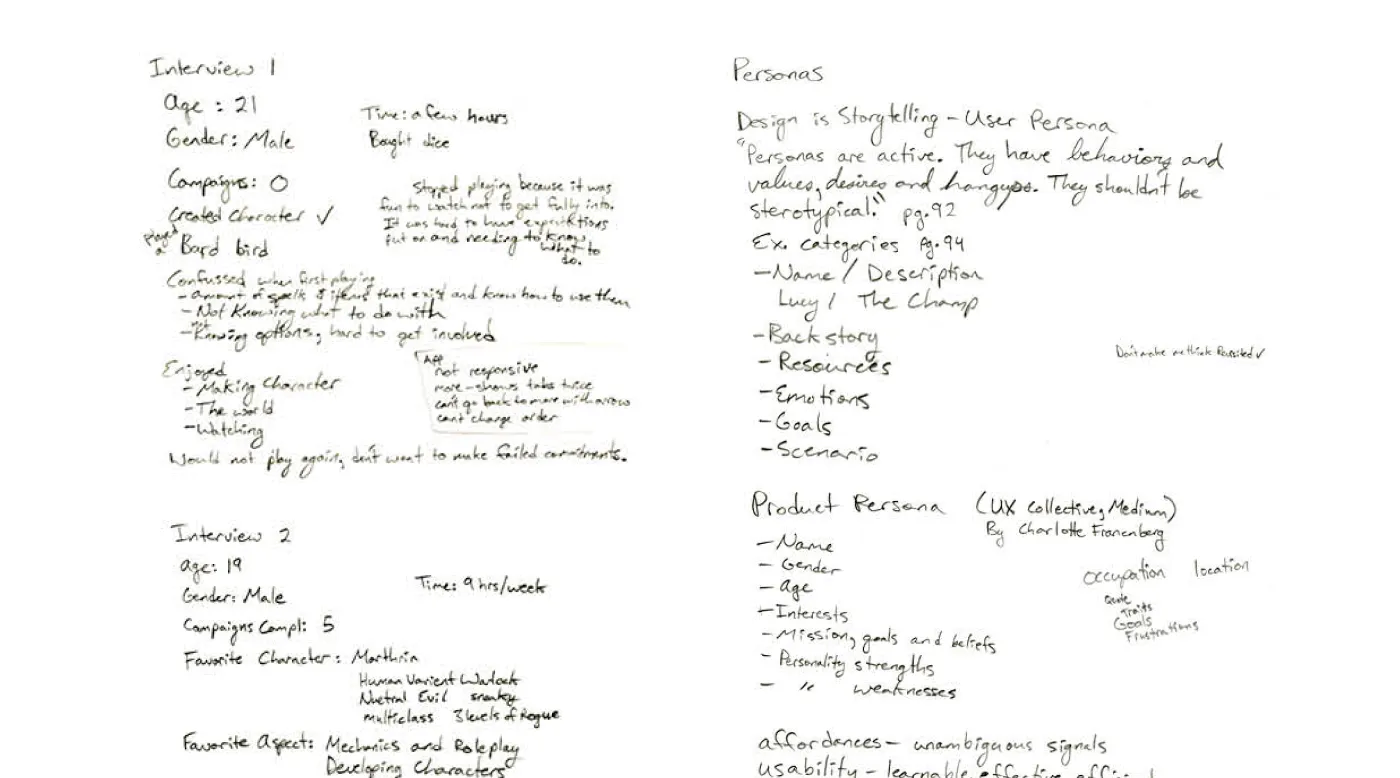
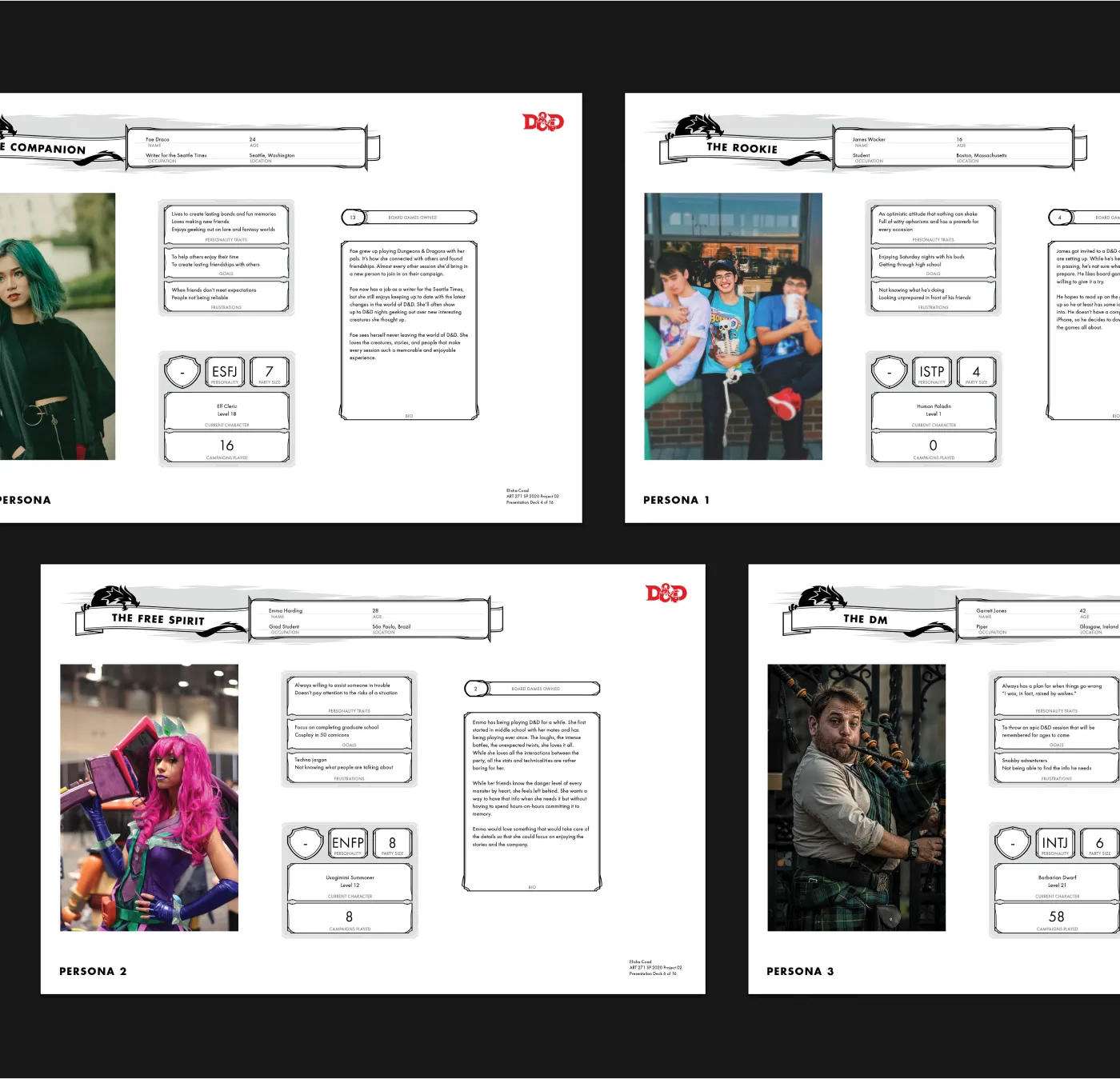
Player interviews
I talked to five D&D players — first-timer to veteran — and a clear split emerged. New players were overwhelmed by the volume of spells, items, and terminology. One described being "paralyzed" by options when starting out. Veterans had the opposite problem: they knew exactly what they needed but were frustrated by jumping between multiple apps to manage characters, reference rules, and roll dice. When I asked everyone what single feature they'd add, the answer was unanimous: dice rolling. Character management, power search, and integrated dice all made the cut because players asked for them.
branding
The original app felt visually detached from the D&D universe — generic enough to be any reading app. I wanted a brand that honored the franchise's legacy while giving the companion app a personality of its own.
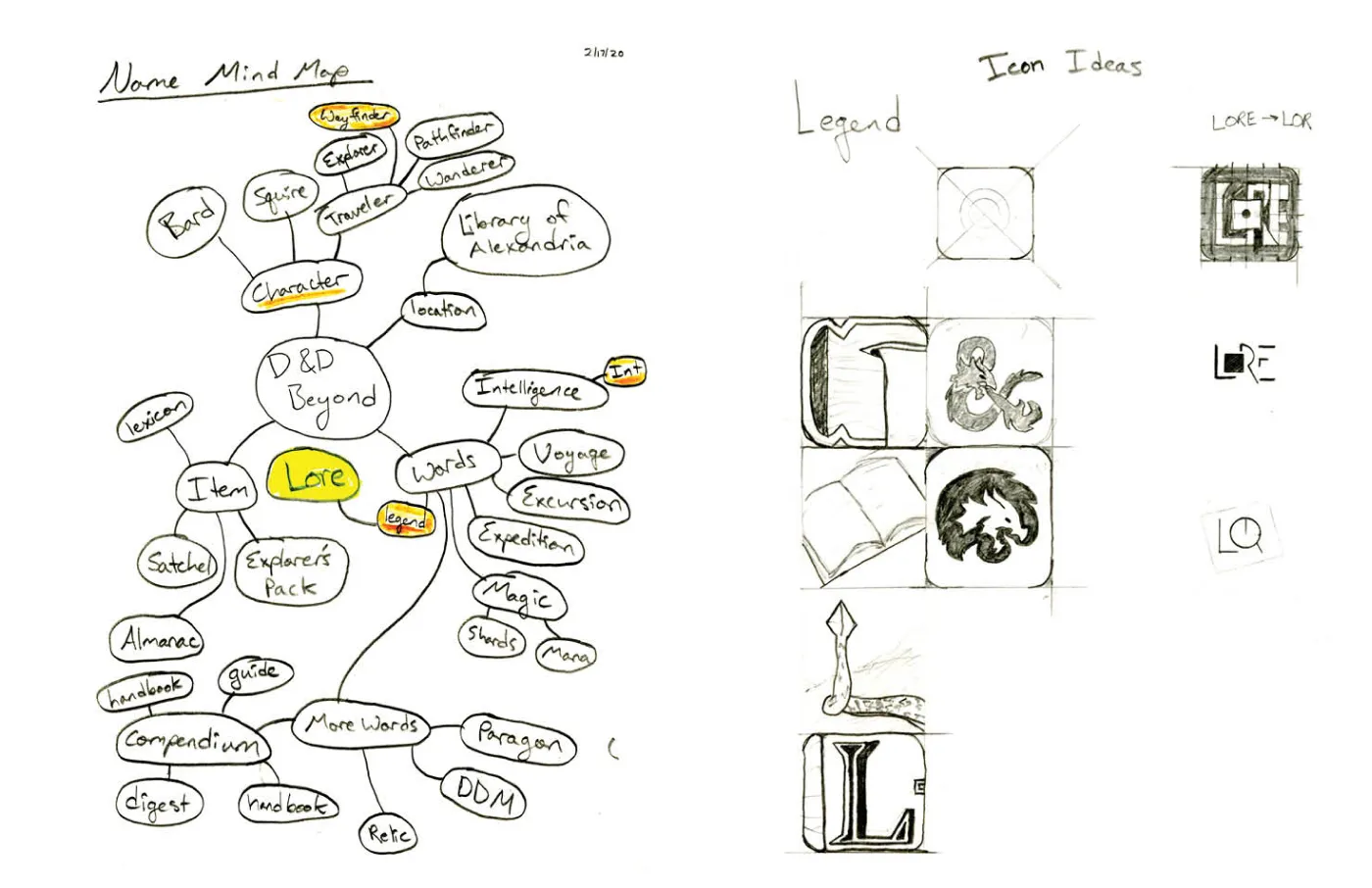

Rooted in the franchise
The name "Lore" and the icon draw directly from signature elements of the D&D logo, then extend them into something distinct. Friz Quadrata serves as the primary typeface — it's the font on classic D&D publications, and players associate it with the franchise even if they can't name it. For the UI, I went with a dark theme. Dungeons are dark and dragons are red, so it felt like the obvious palette for the world.
prototype
I built the interface on Google's Material Design dark UI standards. The framework handles dense information with clean hierarchy — critical when you're referencing spell stats mid-combat — while leaving room for the brand's personality to come through.
Testing
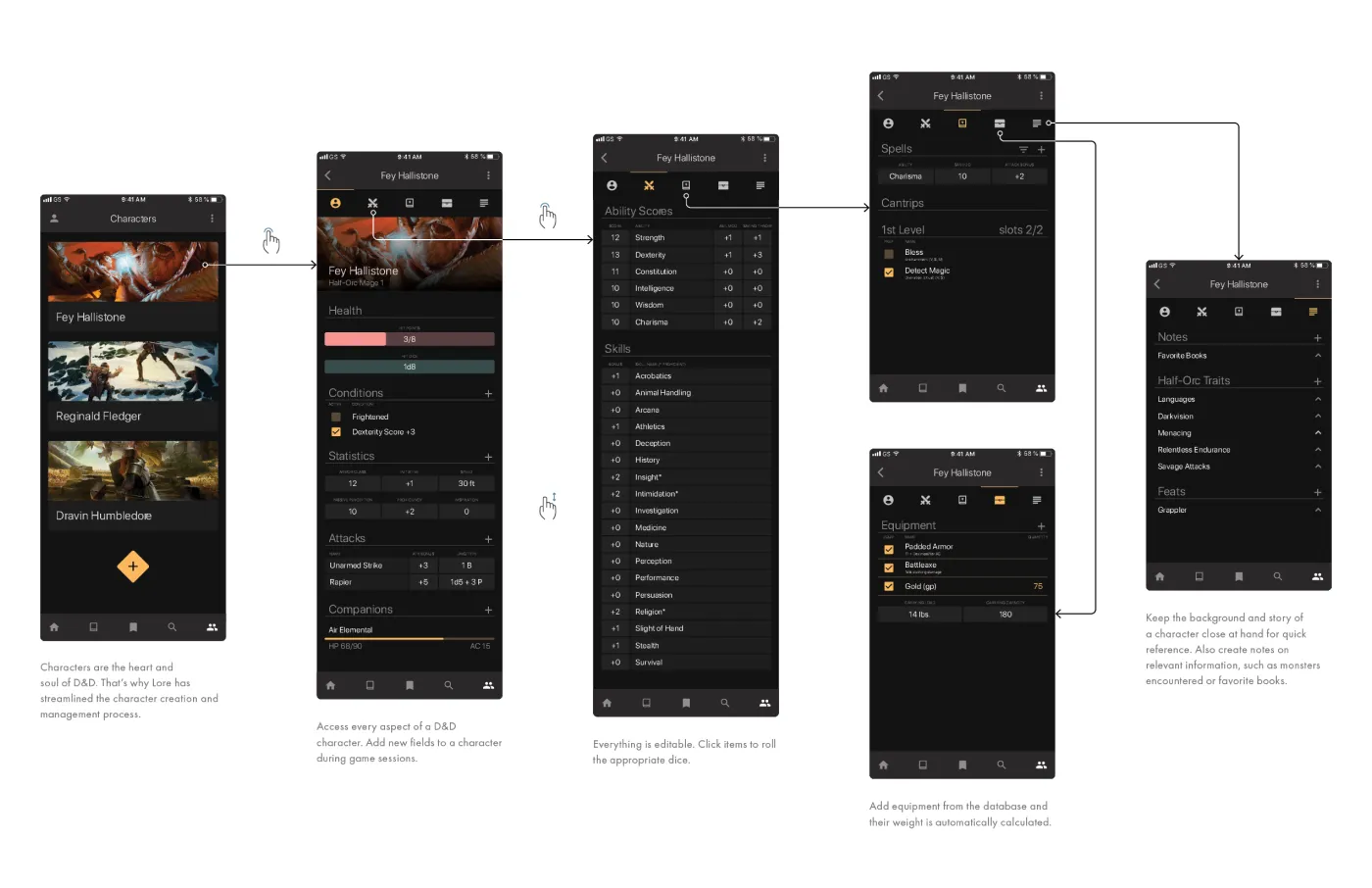
I prototyped key flows and tested with a mix of original interviewees and new participants. The newcomer who'd described feeling "paralyzed" by D&D's complexity found the onboarding and search features made the universe of content approachable. Veterans appreciated deep character management — editable stats, spell slots, equipment with auto-calculated carry weight — and power search that combined the depth of D&D manuals with the accessibility of a modern app. The most common feedback: "this is what the official app should have been all along."
results
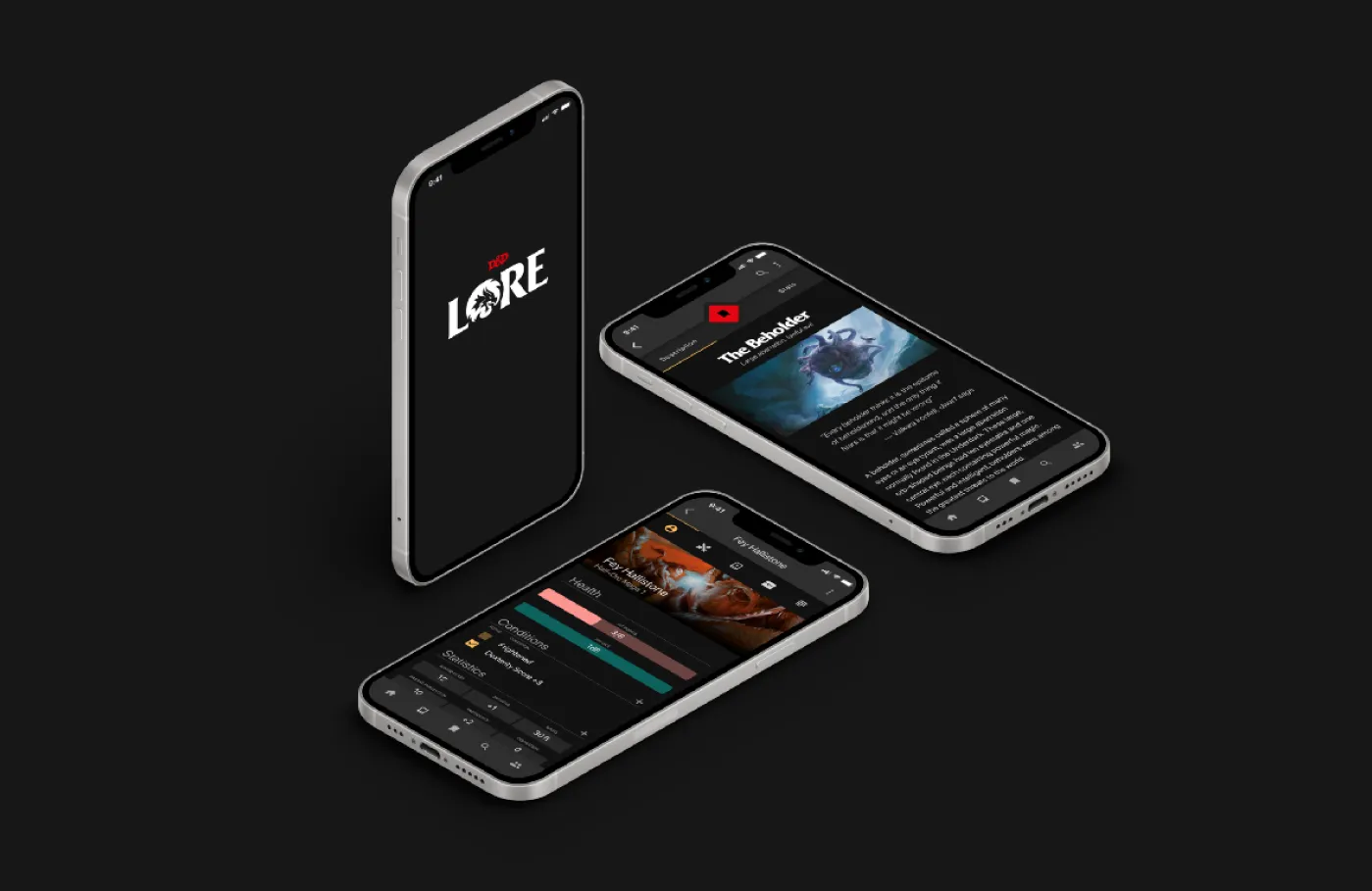
One month. A complete rebrand, 30 documented screens, and a feature set driven by what players asked for — character management, power search, collections, dice rolling, and a content library that actually works at the table.
Validated by the official redesign
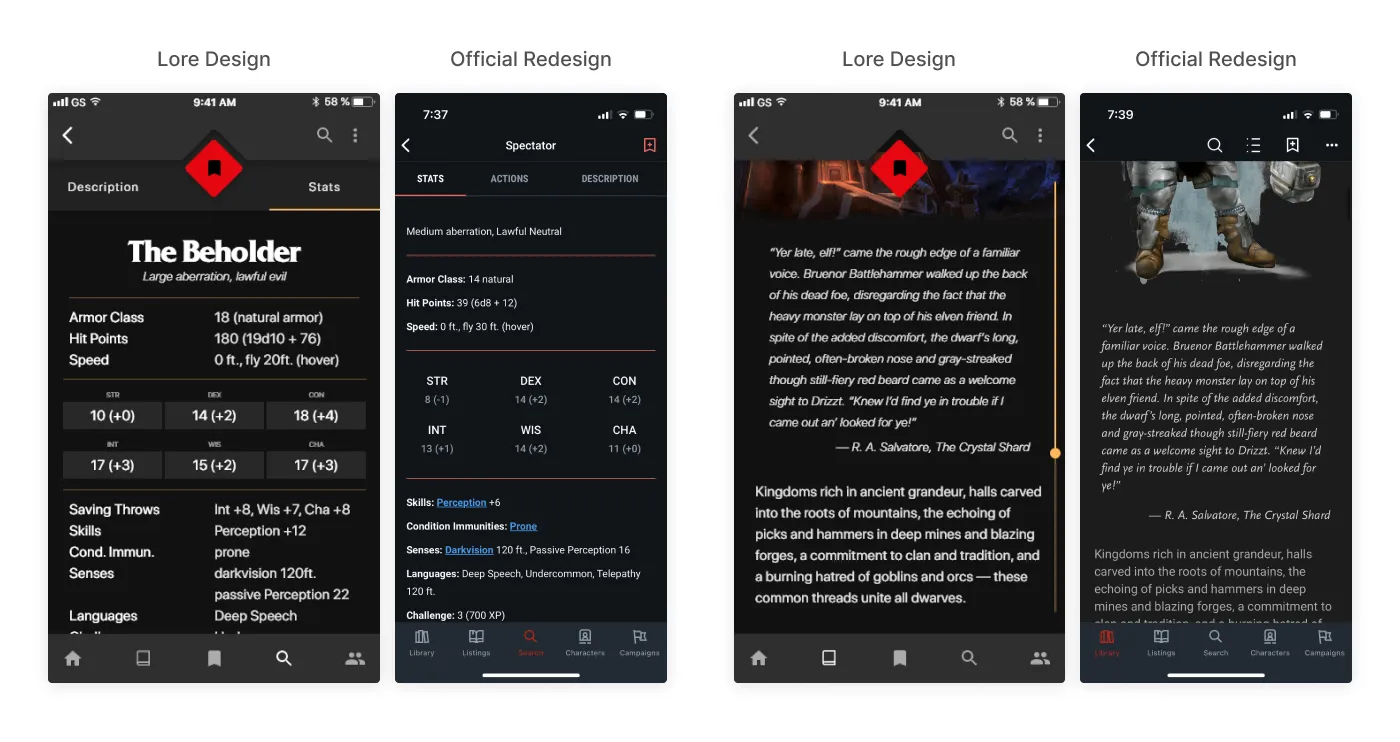
Two years later, D&D Beyond released their own redesign — dark theme, restructured navigation, and several features that closely mirrored this work. Both designs were grounded in the same player needs, which is why they converged. It was an interesting confirmation that research-driven design, even on a speculative project, lands in the same place that experienced product teams end up.
Takeaways
If I revisited this, I'd push further on character creation — interviews revealed it as the most complex and rewarding part of D&D, and it deserved more than adapting existing patterns. I'd also want to test with Dungeon Masters, not just players. Their needs — campaign management, encounter tracking — are an entirely different use case I didn't have time to explore. The biggest lesson was restraint. Players didn't need something revolutionary. They needed an app that actually worked the way they played.